



What a Workflow Audit Actually Produces
"We do a workflow audit" is the most common thing AI agencies say and the least often explained. Here is exactly what a real one produces — so you can tell the difference.
- workflow audit
- methodology
- agency selection
- implementation
"We do a workflow audit" is the most common thing AI agencies say and the least often explained. Every firm that has worked with more than five clients claims it. Almost none of them describe what it produces. Here's exactly what a real one looks like, so you can tell whether an agency is describing a methodology or a kickoff call dressed up in different language.
Why the term gets abused
The term gets abused because it's easy to claim and hard to verify before you've hired someone.
What agencies mean when they use the phrase without a methodology behind it: "We'll talk to your team about what they do, take some notes, and produce a list of automation ideas." This is a useful conversation. It isn't an audit. It produces no quantification, no prioritization criteria, and no governance plan. It produces impressions, which the agency writes up in a slide deck and calls findings.
What a real workflow audit means is different in kind, not degree. It's a structured process that maps inputs, outputs, decision points, error rates, and time expenditures across specific workflows, produces a quantified ROI estimate for each automation opportunity, sequences them by priority, and documents the governance requirements for each one. The output is a document, not a presentation. It looks more like an engineer's specification than a consultant's deck.
The test you can apply on a first call is direct: "What does the output of your workflow audit look like? Can you show me a redacted example from a prior engagement?" If the agency has a real methodology, they have a template and they have examples. If they describe the process conversationally but can't produce a document, you have a process they describe rather than a process they run.
Role mapping is the foundation
The role mapping phase is the foundation of everything that follows.
Who gets included in the interviews matters more than most buyers realize. The people who describe how work gets done are usually different from the people who actually do it. Department heads can tell you what the workflow is supposed to look like. Frontline operators can tell you what it actually looks like: the exceptions, the workarounds, the tasks that don't appear in any process document because they've always been handled informally.
A real role mapping phase interviews frontline operators, not just managers, and captures specific data for each role. Tasks performed and time per task. Tools touched in the execution of each task. Inputs consumed and their format and source. Outputs produced and where they go. Decision points where judgment is applied and what information informs that judgment. Error rates: how often does this step produce an incorrect or incomplete output, and what happens when it does.
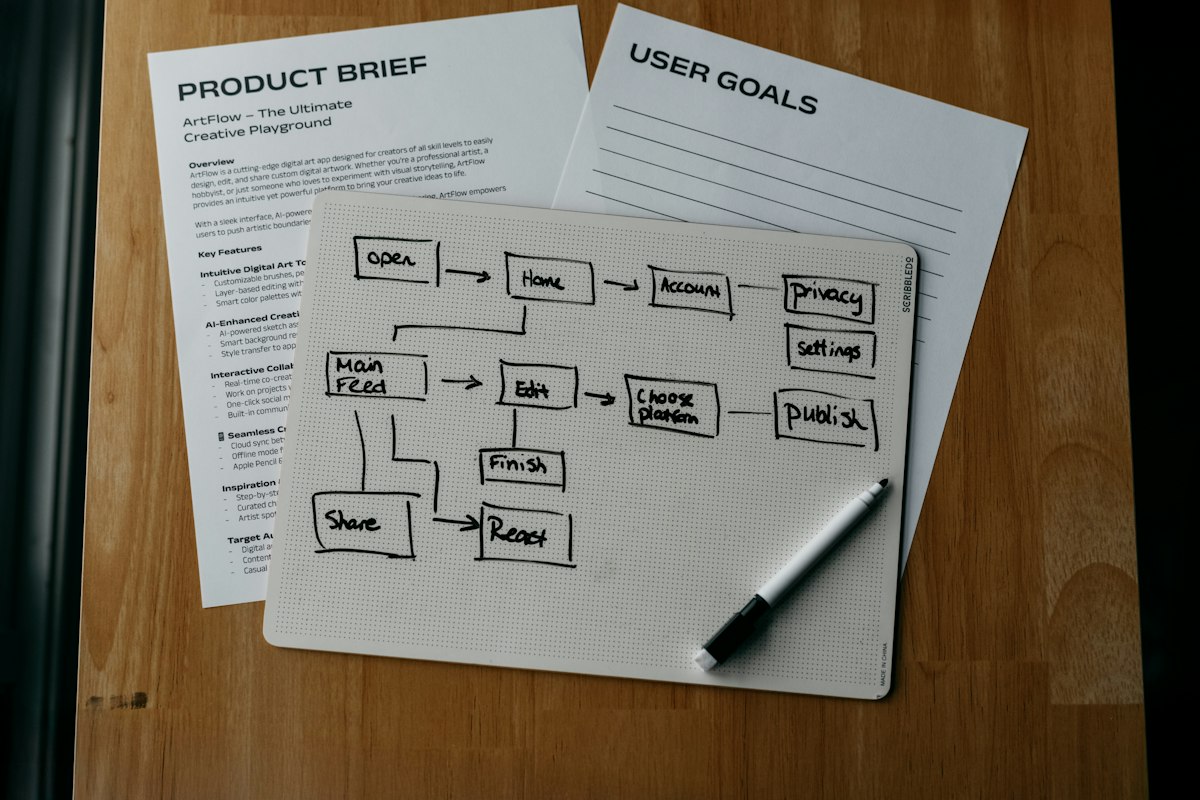
The artifact produced by role mapping is a process flow diagram, not a narrative description. Each node in the diagram has a time estimate attached. The diagram makes visible which steps are candidates for automation, which require human judgment that isn't yet encodable, and which are currently consuming time that far exceeds their business value. This is the document that grounds every subsequent decision. Without it, automation recommendations are guesses. With it, they're calculations.
The ROI calculation turns the map into a plan
The ROI calculation phase converts the process map into a prioritized implementation plan.
The calculation structure is straightforward. Hours per task, multiplied by the number of times the task occurs per month, multiplied by the fully-loaded hourly cost of the person doing it, produces a baseline cost. The same calculation applied to the estimated post-automation state, where automation handles the task in a fraction of the time or eliminates the human step entirely, produces the improved state. The delta is the annual ROI figure for that automation opportunity.
What makes the calculation credible is the source of the inputs. Time estimates come from the people doing the work, captured during role mapping interviews, not from industry benchmarks or the agency's assumptions. When a process owner says a task takes 45 minutes, that's a testable claim they can justify. When an agency estimates 45 minutes based on similar engagements they've done elsewhere, it's an approximation that may or may not reflect your actual situation.
The output of the ROI calculation phase is a prioritized list: automation opportunities ranked by estimated annual ROI, with implementation cost estimates and a recommended sequence. The sequence accounts for dependencies between automations, data readiness requirements, and organizational capacity for change. Not "automate the highest-ROI item first" but "automate the highest-ROI item that your data and people can support in the next 90 days."
Governance is the phase most agencies skip
The governance documentation is the phase most agencies omit and most clients don't ask for.
Every automated workflow requires answers to three questions before it goes live. Who owns it: a specific named person, not "the IT team" or "operations," responsible for monitoring output quality, managing prompt updates, and escalating when something is wrong. What does correct behavior look like: a baseline definition of expected outputs against which drift is detectable, rather than something discovered anecdotally when a team member notices the outputs have changed. What happens when an output is wrong: a specific escalation path with a named responder and a defined remediation process.
These answers need to be documented, not discussed. A conversation about governance isn't governance. A document with named owners and defined responses is governance. The difference matters the first time an output is wrong at 9pm on a Tuesday, and the person who finds it needs to know whether to escalate or ignore it.
The reason governance documentation functions as a deliverable rather than a conversation is permission. Organizations adopt AI outputs at scale when people feel they have organizational permission to rely on those outputs. That permission comes from a policy, not from a demo. Without a governance document, the informal answer to every edge case is "let's check before we rely on it," which kills adoption within weeks of launch. With a governance document, people know the boundary. They know what the AI can do without a check, what requires a review, and what the path is when something breaks.
The signals that separate a methodology from a pitch
The quality signals that separate agencies with real methodology from agencies that describe a process they don't actually run are consistent.
Agencies with real methodology show you the template before you hire them. They can explain how the ROI calculation handles a workflow with variable task frequency, where some months have 200 occurrences and others have 50. They have governance documentation as a named line item in their engagement scope, not as a post-launch conversation.
Agencies without real methodology describe the audit process conversationally: "we spend time with your team to understand how things work." They treat governance as something that emerges from the relationship rather than something produced as a deliverable. They don't have a redacted example to share.
Before you hire, ask for the redacted example. Ask what the ROI calculation template looks like. Ask what the governance handoff document contains and who owns it after the engagement ends. If you can't get concrete answers to those three questions, you don't have a methodology. You have a firm that will talk to your team and tell you what they think you should automate. That's worth something. It's worth a lot less than an audit.
If you want that question answered for your specific situation, the Forge Playbook does it. Answer a few questions about your business and we'll put together a tailored outline of which workflows are worth automating and what a realistic budget looks like for each. Free, no obligation, takes about three minutes.